Loft Studio
1 July – 1 October 2020
Paul Sutherland is a photographer and artist based in Perth. Sutherland is concerned with phenomena surrounding photography as a medium, working diversely between photo-sculpture, video, performance and affective installation. He is currently our artist in residence in our upstairs Loft Studio. Paul’s work will be showcased as part of the RESET Studio Residency closing event.
We spoke to Paul about his artistic career, the industry, what he’s been working on at PCP and what’s coming next.

Could you tell us a bit about your artistic career and how you got into the industry?
I always joke that I became a photographer because I can’t draw, but if you consider that, at university, I dropped out of a graphic design major and into a photography one, it’s almost exactly what happened. For a few years at the start of last decade, taking my camera into parkland and ‘collecting’ textures of rocks and trees to create abstract landscapes was a compulsive and cathartic habit. I think that influenced my attitude to photography today — “the image itself isn’t enough, what else can I do to it?” I consider photography to be at the core of my art practice, but it usually serves as a point of departure for the works I make, located within the realms of photo-sculpture, video and affective installation, and more or less encompassed by the umbrella term ‘post-photography’.
My central artistic interest is to unpack the phenomena surrounding photography; be it the experience of being photographed, the relationship between images, screens and paper, or the tension between the poetic and the documentary that photographs necessarily contain. In addition to its artistic potential, photography also allows me to freelance as an exhibition documenter. It’s satisfying and meditative to produce clean, consistent, neutral images for other people — it’s kind of like a counterpoint to working creatively with the medium. In terms of getting into the industry, I can’t stress enough the importance of throwing yourself into the community, letting people know who you are and understanding the works made by your peers. For me, this included volunteering at the Perth Centre for Photography in 2015 and going to as many exhibitions, artist talks and openings as I could. Nobody’s practice exists in a vacuum; everyone’s a part of a community already — supporting and engaging with that community is how we thrive.
What have you been working on while here at PCP?
During this residency, I’ve been working on a new series of photographs inspired by an alternative mode for the flaneur during a period of travel restrictions and social distancing. I’ve spent the past month or so wandering through international cities on Google Street View, no real plan other than an impulsive “let’s go here today” whim, but typically they’re places I remember being before or places I hope to visit someday in the future. I kind of adopt a “digital flaneur” role, walking through streets aimlessly until I find scenes interesting or photogenic enough to screenshot.
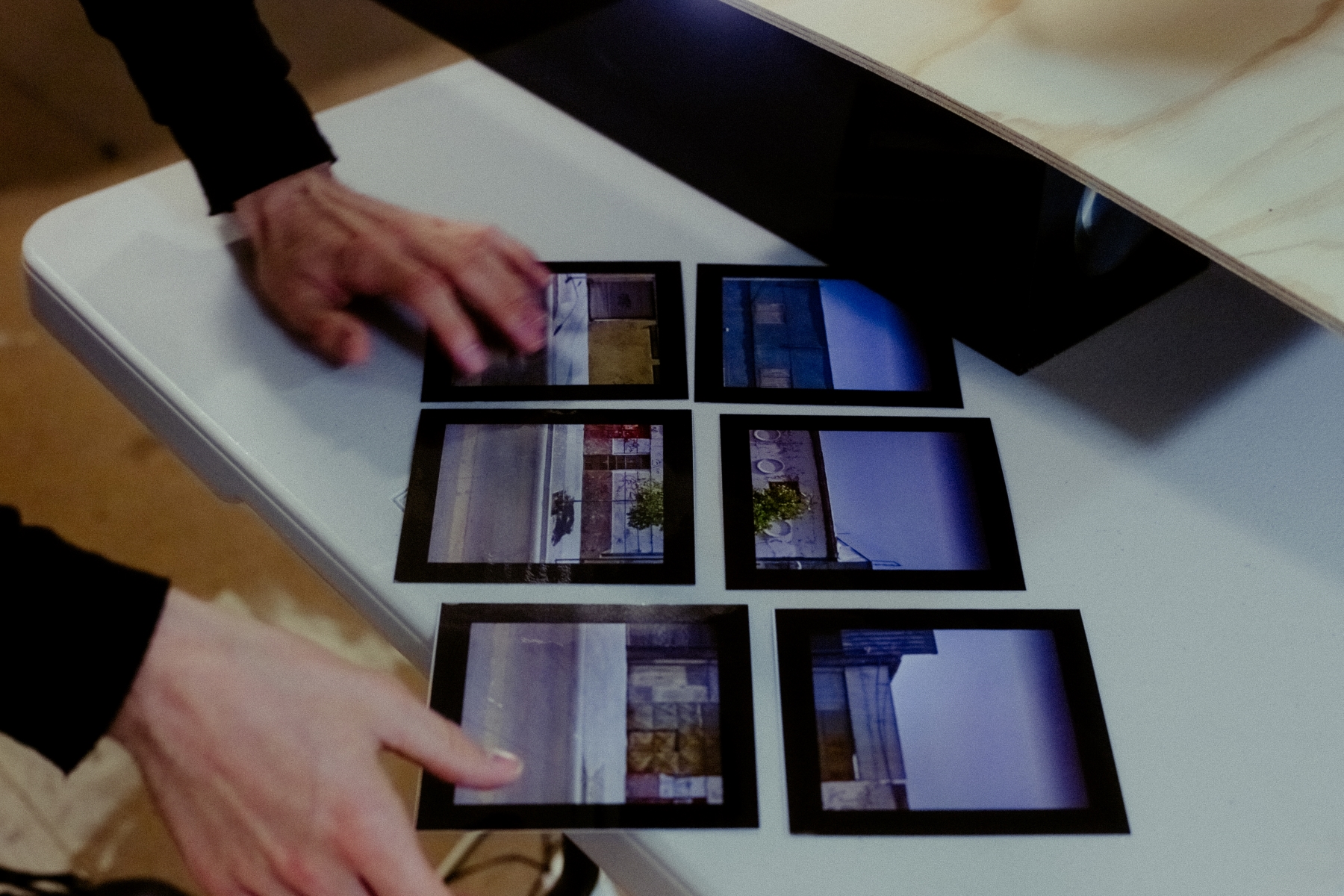
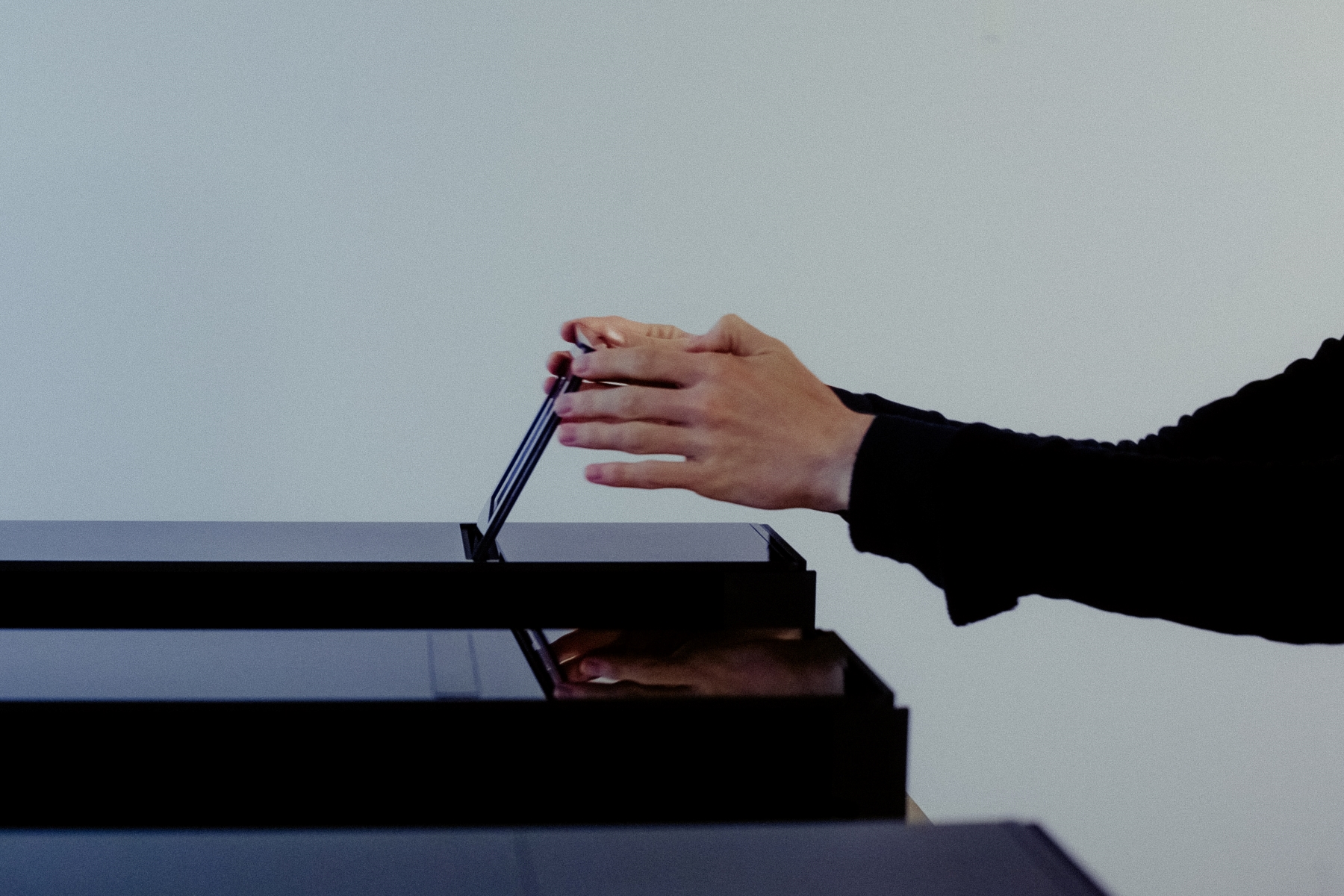
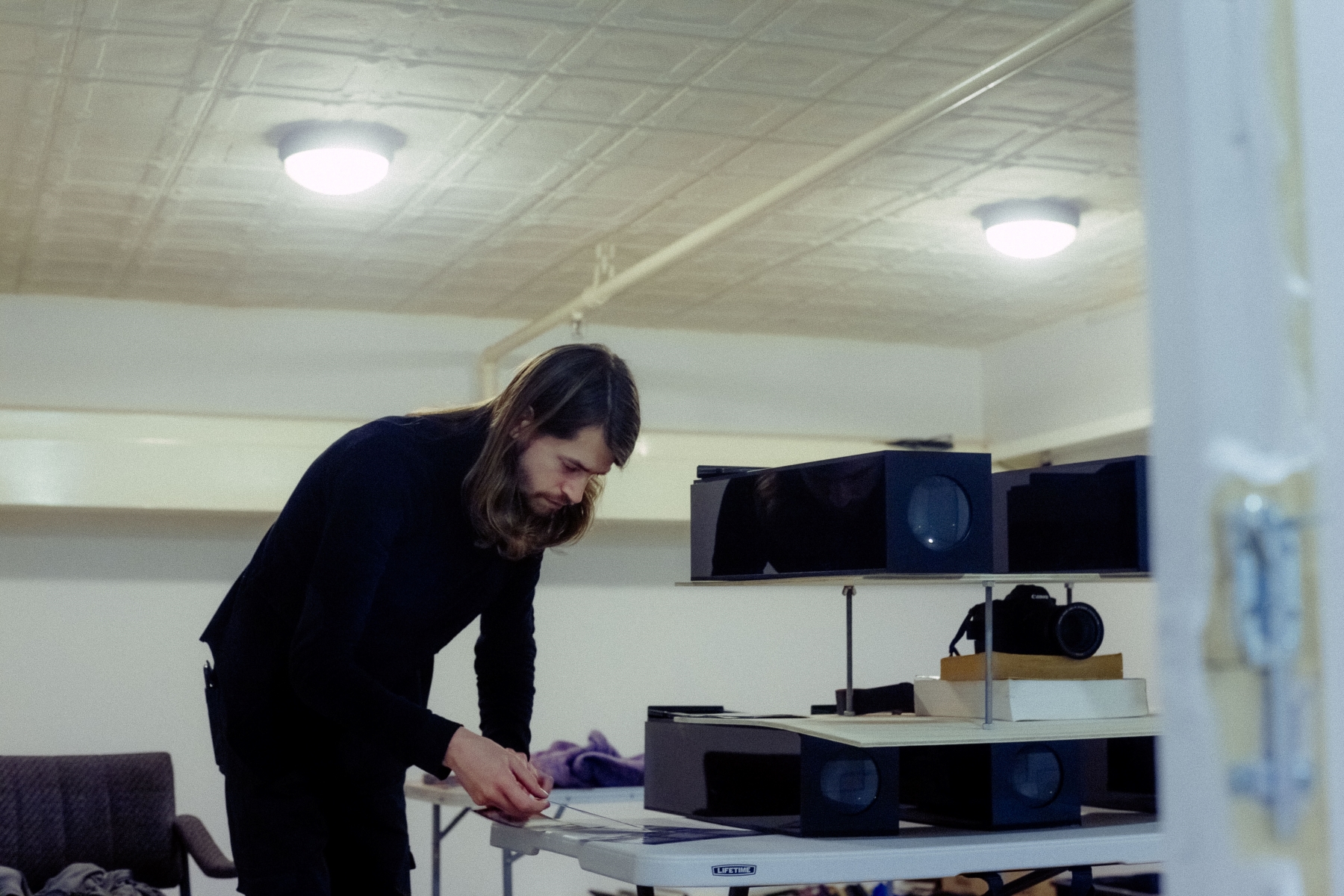
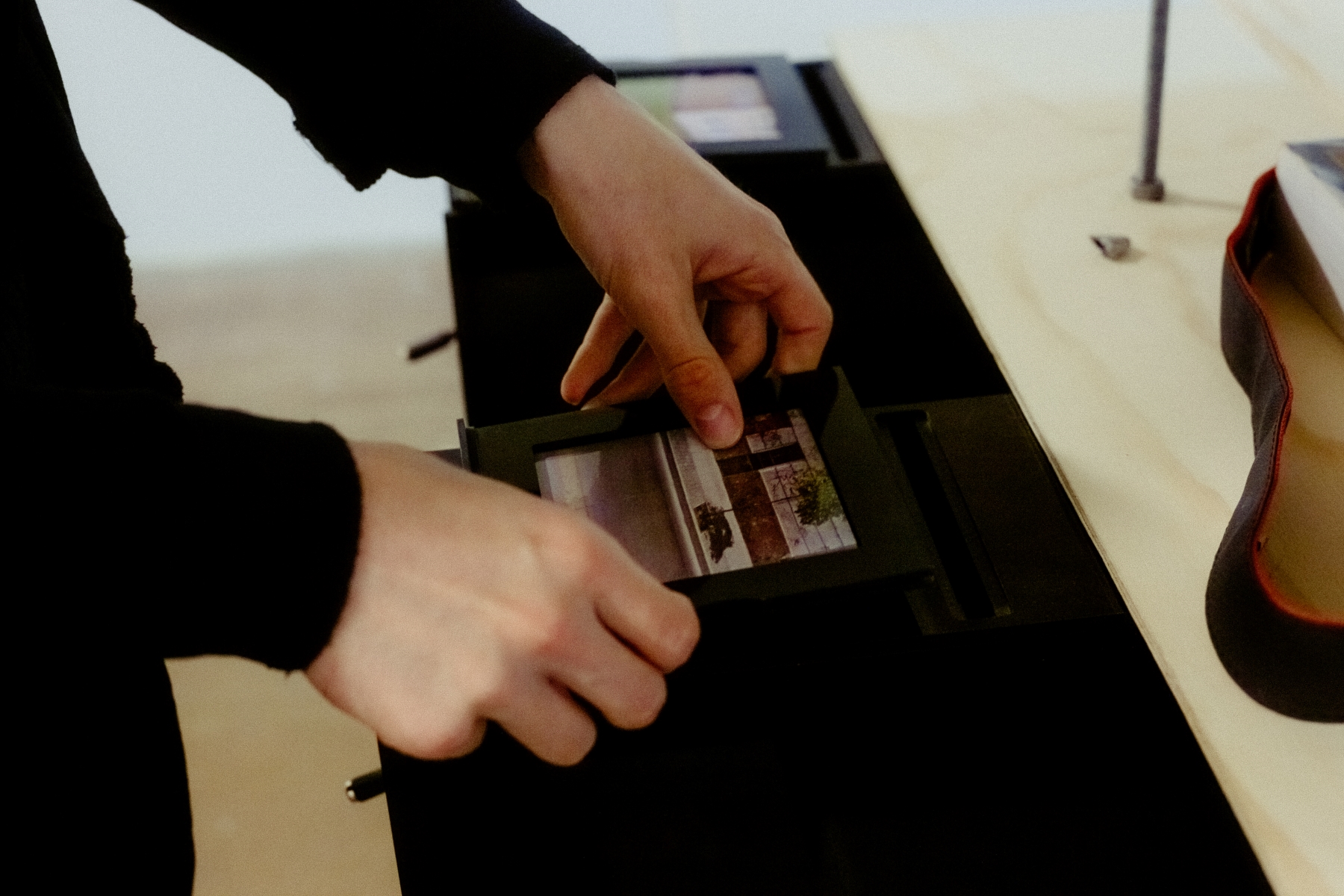
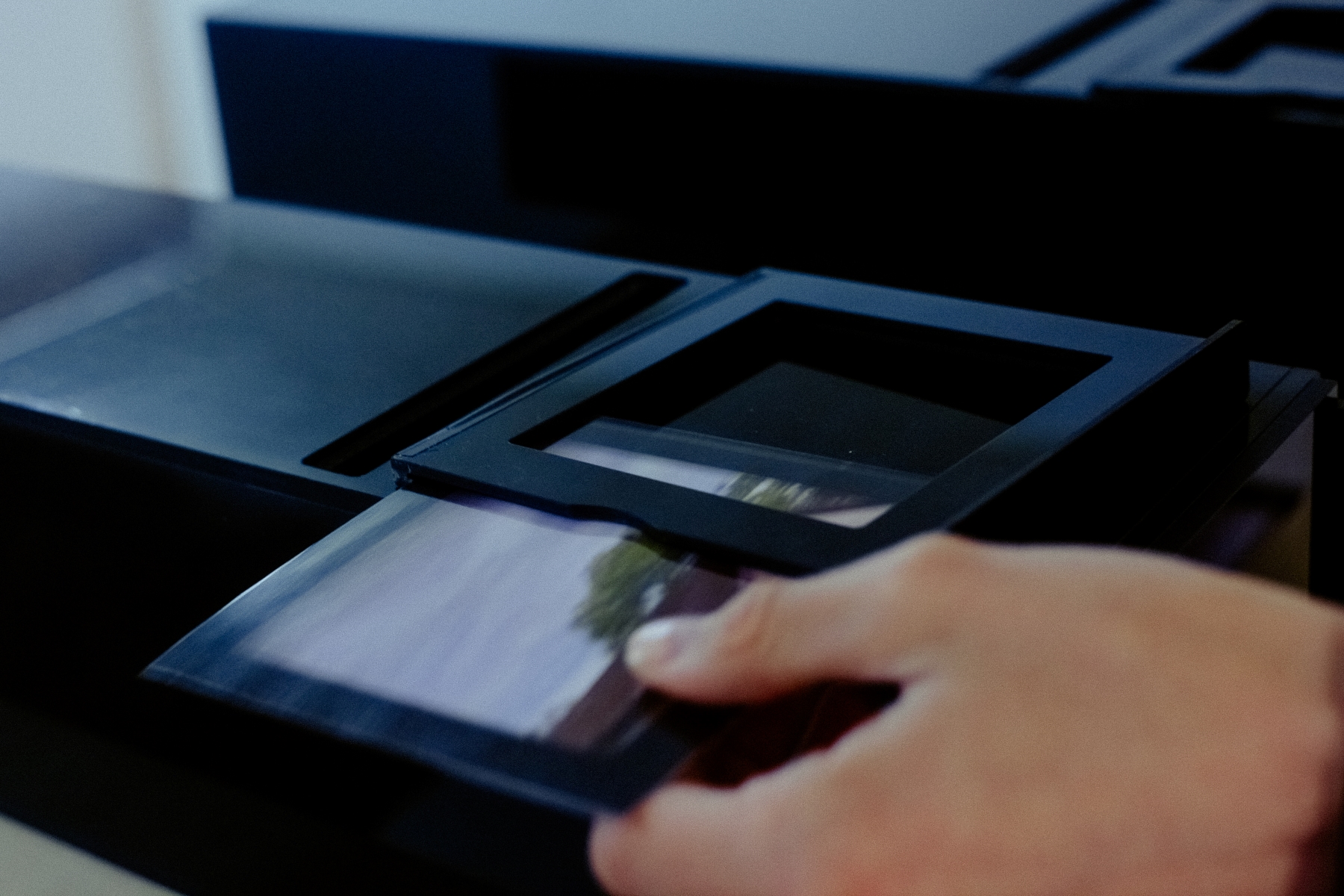
Eventually, I amass a collection of images, print them out, beam them with rudimentary analogue projectors onto a screen I built during the residency, and rephotograph the projections to produce the final works. It’s a convoluted process that bounces from digital to analogue to digital again and serves to muddy the relationship between the original referents in the images and the final works the viewer looks at. The degradation of detail and quality this process enables, combined with the fact that Street View allows you to visit locations at prior points in time, gives the photographs a nostalgic and uncanny mood. I suppose during this residency I’ve been thinking a lot about familiarity and alienation, screens as windows, inside and outside, and recursive image-making processes.
What’s next? Is this work in preparation for a longer-term project?
I tend to like wrapping things up or having a sense of closure with the works I make. That doesn’t happen all the time, and I still have old projects that I want to revisit or polish up someday, but the bodies of work I produce are all pretty self-contained and I’m always working towards an end goal in mind.
For the work I’m making during this residency, I’m beginning to apply for exhibitions and considering different options for installing or presenting the work. Inkjet prints? Lightboxes? Who knows. As I go on my digital dérives, however, I am taking screen recordings — so an accompanying video work is also something I’m toying with. I also don’t think this is the last time I’ll be using these projector boxes. They were initially for a light work exhibited as a part of my show ‘Suburban Apparitions’ with Adrienne Kenafake earlier this year. That exhibition combined photography, light, sound and sculpture to create a haunting installation meditating on loss and grief belonging to people (and animals) in a neighbourhood you aren’t particularly connected to other than geographically. Using them in a very different way during this residency has proved to me their versatility, and I’m pretty excited to see what else I can do with them, or how else I can manipulate or utilise light to achieve post-photographic outcomes.
The way I produce work is very impulsive and often unpredictable — sometimes I don’t have any ideas for months, and then out of the blue I find a new concept to obsess over until it’s resolved. I have a feeling that my next body of photographic work will incorporate mirrors in some way. I don’t exactly know how or why yet, but it’s a curiosity in the back of my mind and I’m acknowledging it. I guess we’ll wait and see.