15th October – 8th November
Tim Pearn graduated from Winchester School of Art (UK) with a Bachelor of Arts Honours in Fine Art – Printmaking and has a Post Graduate Certificate in Antarctic Studies from the University of Canterbury (NZ). His work is influenced by biogeography and remote landscapes – the conjunction of Science and art and the journey through a landscape. Tim has undertaken extensive work with the Aboriginal arts sector statewide, including living and working in the remote Western Desert Ngaanyatjarra lands providing arts development, cultural brokerage, establishing acclaimed Aboriginal art centres and promoting cultural development initiatives in fine art performance and music. Beyond his professional engagement with Aboriginal culture – the oldest continuing culture in the world, interest and experience in Antarctica – the newest culture in the world, Tim has recently turned his attention to the bewildering new landscape and habitat described as the Plastisphere – driven by the man made proliferation of polymer waste and accumulation throughout the environment.
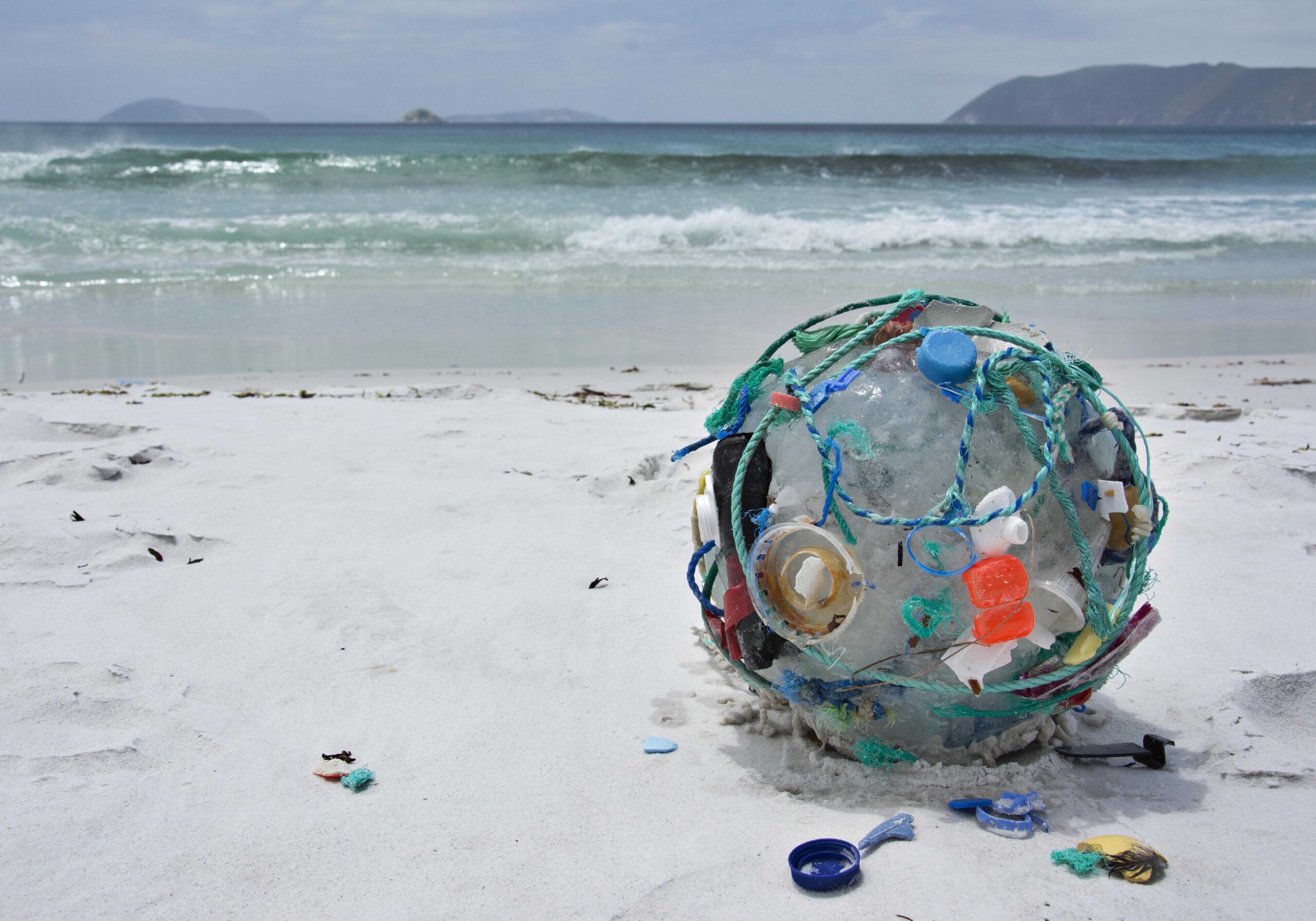
ON THE BEACH In King George Sound near Albany, Goode Beach is one of Western Australia’s few easterly facing beaches. Here the sun and moon rise uninterrupted over the Southern Ocean and the seascape is spectacular. Pods of dolphins frolic, great white sharks ghost through the water and humpback whales blow through on their annual migration from Antarctica. The waters appear wild, pristine – unsullied. I lived at Goode Beach for over a year. On regular morning walks along the squeaky snow white beach next to the percussive wave break I started to notice the colourful confetti of fragmented plastic debris and began collecting it. Shockingly, for over a year upon every walk I could continue to collect these fragments of plastic of varying sizes – day after day, ad infinitum. Like Neville Shute’s apocalyptic novel On the Beach, where a cast of characters await their fate as a cloud of radioactive poison slowly engulfs the planet, so we face, with wave after wave, an ever growing build-up of toxic plastic rubbish throughout our marine environment. A recent study estimated 8 million metric tons of plastic waste enter the oceans every year. This is a new landscape – a dark new nature of our own making. Plastics are a recognised marker heralding the beginning of the Anthropocene, a new epoch which acknowledges that the principal process of geophysical change on the planet is driven by human activity. When I was a child in Cornwall, I would often come home from the beach with crude oil on my shoes or clothing. The oil was from the 1967 Torrey Canyon disaster, which occurred when an oil tanker sank off the Cornish coast, spilling120,000 tons of crude oil. The plastics that now litter our beaches are derived from the same raw material of hydrocarbons. Crude oil itself was made by the death of trillions of organisms in one of the worlds mass extinctions millions of years ago. If fossil fuels are the Prometheus gift of fire then plastics are surely Pandora’s unwitting curse on humanity and the environment.
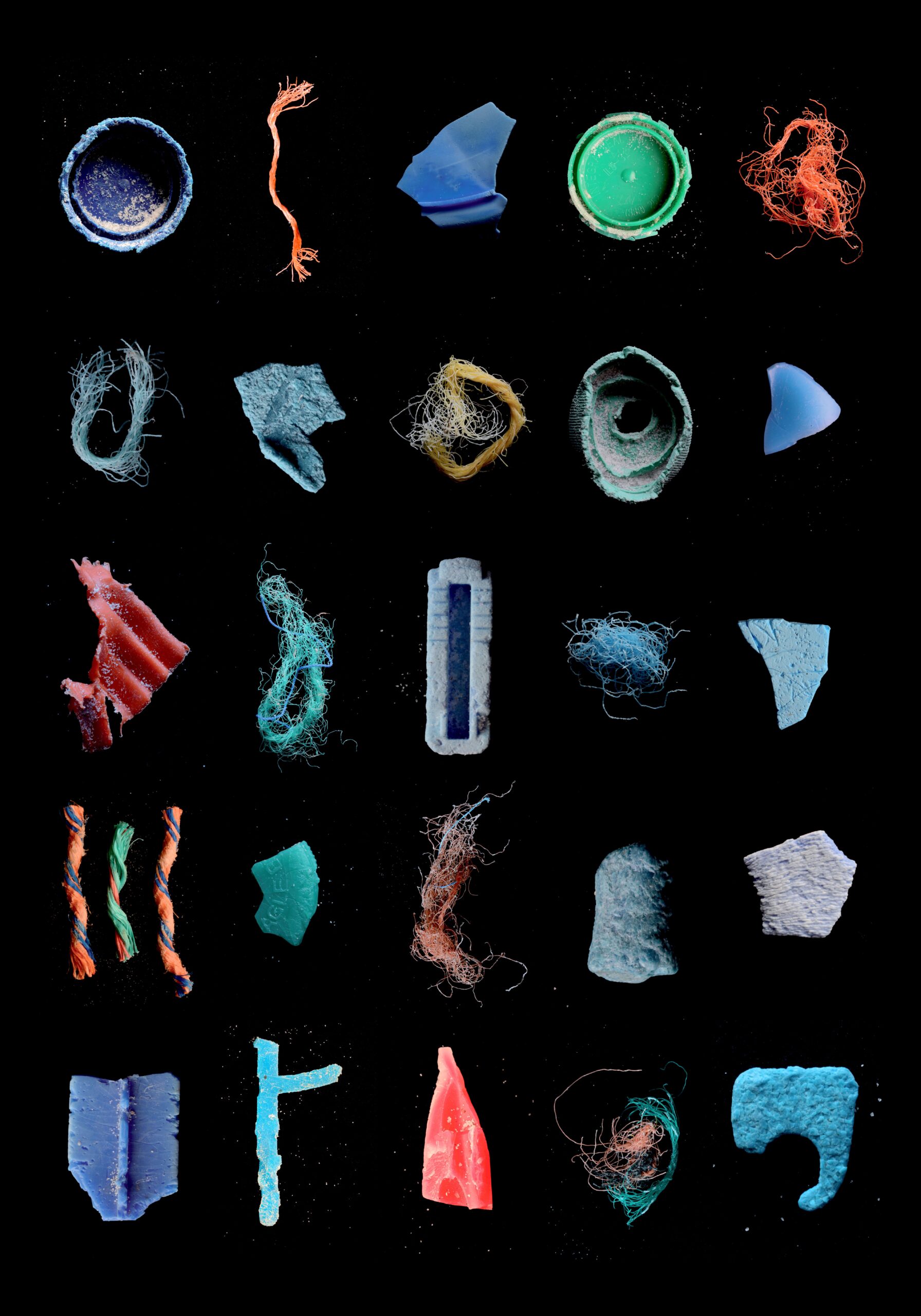
© Tim Pearn, 100 Plastic Fragments Part 1